I am grateful to Revd Jonathan Halliwell for this interesting reflection on Matthew 22.15-22, the lectionary Gospel for Sunday 22 October 2023. Jonathan is a distinctive deacon serving his curacy in St John & St Philip, The Hague. As part of his ministry, he serves as a port chaplain for the Mission to Seafarers in Rotterdam. If you want to contact Jonathan you can do so via deacon@stjohn-stphilip.org
Clare Amos
Director of Lay Discipleship
Diocese in Europe
In preparing to preach about our relationship with money, I was interested to discover that Holland is the only country in the European Monetary Union that uses a religious inscription on its coins. There they are, inscribed on the edge of the coin (to prevent forgery and clipping) the words ‘(May) God be with us!’
The full quotation, “if God is with us who is against us?” (Romans 8.31), written in Latin (quis Deus nobiscum quis contra nos) appeared on coins of the Dutch Republic in 1581. They are part of the founding charter of the modern Netherlands. There is some irony in the fact that the text combines religion and money, the two chief causes of the Dutch secession from Spain. But history matters and people have long memories!
There is another irony that a country without a state religion should invoke the protection of God in this way. Yet the Reformed Political Party (SGP), who support the separation of church and state, campaigned for its inclusion. In their desire to outlaw false religions and dethrone deities, they uphold the words of Psalm 96:5, which declares, ‘for all the gods of the nations are idols, but the Lord made the heavens.’ Our gospel today (Matthew 22.15-22) reminds us that Jesus had to confront the political and religious establishment of his time, not least the divine authority of Caesar.
In her first blog of this new series, Clare Amos noted that there seems to be a common understanding among the New Testament writers that the ‘image of God’ was found with a particular fullness in the person of Jesus Christ. Now when Jesus asks, ‘In whose image (eikōn) is this coin?’, that is, ‘whose head is on it?’, Jesus was relativizing the authority of Caesar, putting him in his place, so to speak. Jesus had asked the Pharisees and the Herodians to bring him a denarius, a Roman coin which bore an image of the emperor’s head, containing the inscription in Latin, ‘Tiberius Caesar, son of the divine Augustus (‘Tiberius Caesar Divi Augusti Filius Augustus). He exposes the question of whether to pay taxes to Caesar or not as a false dilemma and answers ‘Therefore render to Caesar the things that are Caesar’s, and to God the things that are God’s.’ In other words, pay your taxes to Caesar but remember that God has ultimate authority over all of his creation.
A Roman denarius showing the head of the Emperor Tiberius
Of course, such a bold claim did not come without a cost and Jesus would pay the ultimate price for dethroning Caesar. As Saint Augustine reflected,
He himself, the only-begotten, was created to be wisdom and justice and holiness for us, and he was counted among us, and he paid the reckoning, the tribute to Caesar. (Saint Augustine, Confessions)
In the light of our gospel today, it is significant that the charge against Jesus was also written on an inscription. The inscription placed above him on the cross bore the title ‘Jesus of Nazareth, King of the Jews’ (Mark 15.26). By suggesting that Jesus’ execution was made on the grounds of sedition against the emperor, it raises the question of authority again.
Coins and inscriptions are powerful symbols which raise questions about our allegiances and affect the way we live our lives. In laying down his body, Jesus spared usthe wages of sin (Romans 6.23), that we might have life, and life eternal. In allowing his body to be tortured, disfigured and abused, he restored the divine image in us. He reminds leaders that all human persons, even Caesar, bear the image of the living God (cf. Genesis 1.26-27).
So in expressing our allegiance to God, we make the words inscribed on the Dutch coin that God be with us into a pledge. The effect of ‘dethroning Mammon’ (to borrow the title of Archbishop Justin Welby’s Lent book), or any of the other contemporary forces which dominate our lives is to restore the image of God in us, enabling our relationships with one another to thrive. By restoring the authority of God, in whose image we were created, we can be remade in the image of God. As the monk Evagrius Ponticus argued, love of neighbour is love of God because it is love of the image of God.
Prayer of Confession
The following prayer of confession, one of the alternatives offered by Common Worship, reminds us that we are all created to bear the image of God:
Father eternal, giver of light and grace,
we have sinned against you and against our neighbour,
Armenian pottery communion plate made in Jerusalem depicting the loaves and fishes mosaic at Tabgha, Galilee
This week’s blog engages with Isaiah 25.1-9; Philippians 4.1-9, Matthew 22.1-14, three Common Worship lectionary readings suggested or Sunday October 15.
Clare Amos
Director of Lay Discipleship, Diocese in Europe
It feels quite a challenge to offer a reflection for this week’s blog, especially given the circumstances that the world, in particular the Middle East, finds itself in at the moment. My husband and I have long-standing links to several countries in the region and to the people that live in them. Current events inevitably reverberate in my memory with some of the horrors we ourselves lived through years ago. I once read the words of Donald Nicholl, a profound Roman Catholic theologian, who commented (in relation to the situation in the Holy Land), ‘the task of the Christian is not to be neutral, but to be torn in two.’ I can honestly say that ‘torn in two’ is how I personally feel at the moment.
In normal days, I cherish the focus on ‘joy’ and ‘rejoicing’ in the Letter to the Philippians, which reaches its zenith in this week’s selected passage Philippians 4.1–9, ‘Rejoice in the Lord always; again I will say, Rejoice’. But I am having to work fairly hard on ‘joy’ just at the moment – it doesn’t seem quite a natural or appropriate emotion in the present days. So I remembered the words of Dietrich Bonhoeffer, who himself reflected on ‘joy’ in the most appalling of personal circumstances:
‘Gratitude transforms the torment of memory of good things now gone into silent joy. One bears what was lovely in the past not as a thorn but as a precious gift deep within, a hidden treasure of which one can always be certain.’
It is of course salutary to remember that it is likely that Paul penned his ‘joyful’ letter to the Philippians when he himself was in prison.
Back in the 1980s the then Archbishop of Canterbury, Robert Runcie, reflecting on ‘joy’, suggested that it was experienced when we try to hold together realities that can be seen as paradoxical: life and death, weeping and laughter, sorrow and bliss. Something of this is expressed in a powerful extract from For the Life of the World a book written by the Orthodox theologian Alexander Schmemann:
‘From its very beginning Christianity has been the proclamation of joy, of the only possible joy on earth. It rendered impossible all joy we usually think of as possible. But within this impossibility, at the very bottom of this darkness, it announced and conveyed a new all-embracing joy, and with this joy it transformed the End into a Beginning. Without the proclamation of this joy Christianity is incomprehensible. It is only as joy that the Church was victorious in the world, and it lost the world when it lost that joy, and ceased to be a credible witness to it. Of all accusations against Christians, the most terrible one was uttered by Nietzsche when he said the Christians had no joy.’
It is therefore significant that the ‘traditional’ preface to our Eucharistic Prayer includes the word ‘joy’…’ It is indeed right, it is our duty and our joy…’, and then speaks of giving ‘thanks and praise’. The pairing of the word ’joy’ with ‘duty’ should perhaps give us pause for thought.
I don’t find this week’s Gospel reading from Matthew 22.1-14 ‘easy’. It contains difficult ‘notes’ – not least the addition of the tale about the man without the wedding garment – that accentuate the frequent focus on judgement that appears in Matthew’s Gospel. I have to confess to finding Luke’s parallel, in Luke 14.15ff a more congenial read.
But Matthew’s version, which describes the event as a ‘wedding feast’ encourages us towards an important insight. Throughout the Bible a ‘banquet’ is presented as the central image of human life as God wants it to be lived. To quote Alexander Schmemann again, ‘this image of the banquet remains, throughout the whole Bible, the central image of life. It is the image of life at its creation and also the image of life at its end and fulfillment: “… that you eat and drink at my table in the Kingdom.”
The New Testament seems to intensify the image into a ‘wedding feast’ as here in Matthew, or in John’s account of the wedding at Cana (John 2.1-11) or in Revelation’s reference to the ‘marriage supper of the Lamb’ (Revelation 19.9). As Isaiah 25.1-9 suggests this will be a time in the future when God will ‘wipe away the tears from all faces’ (Isaiah 25.8).
Over the years I have found it intriguing to notice how from earliest times the Christian understanding of the Eucharist, has not only looked back (to the Last Supper and the death of Jesus Christ), but has also had a ‘present’ and a ‘future’ focus. The present focus is linked to the building up of the Church community as ‘the Body of Christ’, the future focus sees the Eucharist precisely as being ‘a foretaste of the heavenly banquet prepared for all people’ – to which the biblical texts allude.
It is interesting that there is a first or second century Christian text closely associated with Syria in which the thrust of the Eucharist is future rather than past. That is the Didache. The relevant passage has been paraphrased into a fairly well known hymn beginning ‘Father we thank thee who hast planted’. In this Didache text there is no direct reference to the death of Christ but (as the paraphrased version puts it) it concludes:
‘As grain, once scattered on the hillsides,
Was in this broken bread made one,
So from all lands thy church be gathered
Into thy Kingdom by thy Son’.
Throughout much of Christian history this forward thrust of the Eucharist was lost or minimalised, at least in western Christianity. We owe a considerable debt to the Methodist liturgical scholar, Geoffrey Wainwright, who ‘rediscovered’ it and encouraged wider reflection on this aspect. Now, this forward gaze has rightly found its way back into our Anglican eucharistic liturgies. So, for example, at the service I attended at Worcester Cathedral last Sunday, the post-communion prayer concluded with the words:
‘and here a pledge of future glory is given, when we shall feast at that table where you reign with all your saints for ever.’
I think there are ‘hints’ in Matthew’s Gospel that the community for whom he wrote also ‘looked forward’ in their celebration of the Eucharist. It is of course interesting that Matthew’s Gospel may have itself originated in a part of Syria not far from where the Didache was probably written.
So perhaps one way of engaging with this week’s rather difficult parable of the wedding feast is to see it as a reminder that in our worship/Eucharist/Holy Communion we are anticipating that joyous future in which God will invite all people to share in the feast that he has prepared for humanity. That will indeed be a time our duty has also become our joy and when, as the lovely Taize chant puts it, ‘The kingdom of God is justice and peace, and joy in the Holy Spirit’. https://www.youtube.com/watch?v=-dToFKnGplc
Yet once we begin to look at the Eucharist in those terms, which pull us from the present towards the future, then we need also to remember the salutary words of the former Jesuit leader Pedro Arrupe, ‘Whenever in the world a person in hungry our Eucharist is incomplete’…
Given its three year cycle, in October 2020 the Common Worship lectionary readings Isaiah 5.1-7 ; Philippians 3.4b-14 ; Matthew 21.33-46. were the same as we will use this coming Sunday, I drew attention in 2020 to some significant questions the readings pose for many of us in Europe, and certainly for me. I revisit (and rework) what I said then, for the questions are not ones that have gone away in the interim, indeed in some ways may be even more pressing. However as I noted at the time, it is also interesting that the biblical readings about the care of the vineyard should ‘fall’ so soon after the Season of Creation. Back in 2020 husband, Canon Alan Amos, the most gracious (yet challenging!) of theological conversation partners, wrote a powerful prayer that linked ‘creation’ with the main thematic focus of the blog. This time I use Alan’s prayer to ‘introduce’ the blog.
Clare Amos, Director for Lay Discipleship, Diocese in Europe
Lord, you are our gracious landlord we the tenants of your land-holding the earth there is room for all of us as those who care for your creation. We like to think we own the plot, as Christians we can dispense your salvation to the world and yet we cannot; we can point in your direction and then to our surprise see many others, from here and there showing us their signs of faith; The vineyard is yours, and ever shall be; you have not turfed out others to bring us in; for you are the generous host and at the end of the day the feast of plenty will provide for all who wish to come. (Alan Amos)
In view of my own background and professional interests inevitably I read this week’s lectionary passages while reflecting on the topic of Jewish-Christian relations. The readings force us to address an issue that Christians in Europe simply cannot avoid, namely the relationship, both theologically and practically, between Christianity and Judaism. In fact at the present time we are in the most significant part of the Jewish religious year, what are called the ‘High Holy Days’, in which our Jewish brothers and sisters are now celebrating their harvest festival of Sukkot (Tabernacles/Booths) having recently kept both Rosh ha-shana (New Year), then Yom Kippur (Day of Atonement)
The lectionary Gospel (Matthew 21.33-46) is Matthew’s version of what is generally called ‘the Parable of the Tenants in the Vineyard’. It also appears in the Gospels of Mark and Luke, but if anything the version in Matthew feels harsher, in particular because of the comment, ‘Therefore I tell you, the kingdom of God will be taken away from you and given to a people that produces the fruit of the kingdom’ (Matthew 21.43) which does not appear in either of the other Gospels. The ‘you’, in that sentence appears to be the chief priests and Pharisees, in other words, key representatives of the institutional Judaism of Jesus’ day.
You cannot read the New Testament without realising that a key ‘puzzle’ in the minds of many Christian disciples in the half century following on the earthly life of Jesus was the question as to why many, indeed most, of Jesus’ fellow Jews had not also seen him as their Messiah and Saviour. The earliest disciples were themselves Jews of course, and for them that ‘puzzle’ was mixed up with their own loyalty and love for their Jewish heritage. Paul, in fact, seems to be wrestling with this issue, in the passage from Philippians selected for this week (Philippians 3.4b-14) – seeking to hold together his Jewish identity, of which he was clearly proud, alongside his knowledge of Jesus Christ. In Romans 9 – 11 he addresses the issue more extensively. Even though, fairly quickly, the majority of the Christian church became people of Gentile origin that fundamental question did not go away, though perhaps that earliest sense of acute personal wrestling and angst became less pronounced among Gentile Christians.
By the end of the first century AD what is often called ‘the parting of the ways’ between Christianity and Judaism was well in train. After the war between the Jews of Palestine and the Romans c 70 AD which led to the destruction of the Temple in Jerusalem, Judaism too was seeking a renewed sense of self-understanding. The dating of the various Gospels is a matter of (considered) conjecture, but at least some of them probably date from the period after 70 AD when the attitudes of both the Jewish and Christianity communities towards each other were hardening.
The parable of the tenants in the vineyard, at least as it is recounted in the Gospel of Matthew, seems to reflect this context. It is easy to read it, and it may well be that the author of the Gospel intends us to, as suggesting that the role that ‘official’ Judaism had had in God’s purposes had been taken away from it, or ‘superseded’ – by Christianity. Perhaps it was sometimes too easily forgotten that, as is implied in Isaiah 5.1-7, ‘the Song of the Vineyard’, the Old Testament ‘thematic’ reading for this Sunday, God most chastises those whom God most loves. The idea that Christianity had replaced Judaism, formally known as ‘supersessionism’ or sometimes ‘replacement theology’, became very wide-spread in Christian history, especially after the establishment of the Christian Empire under Constantine. For many – perhaps most – Christians until very recently, their affirmation that God had chosen the ‘Church’ for his purposes, became one side of a coin of which the other side was the assertion that the ‘Synagogue’ and the Jewish faith had no longer any part to play – it had been ‘superseded’.
In medieval Europe this was sometimes depicted in art by contrasting pictures or statues of a triumphant Ecclesia (Church) and a downcast Synagoga (Synagogue) – see below. Such depictions hint at the dangerous practical consequence of this teaching of ‘supersessionism’, which proactively encouraged discrimination, mistreatment and all too often violence against individual Jews and particular Jewish communities. In many of our lands of Europe there are notorious examples of such attacks in the Middle Ages. But of course, as we know only too well, anti-Judaism and antisemitism in Europe did not die out several centuries ago. It deeply and horrifically scarred the twentieth century. In fact it still continues today. During the COVID period there were examples of antisemitic lies on social media which suggested that Jews bore responsibility for the spread of COVID-19. In response to the negative medieva portraya of synagoga and ecclesia, St Joseph’s university in Pennsylvania in the USA has produced a modern portrayal which depicts Judaism and Christianity as two euqal and loving sisters. This is used as the illustration at the head of this blog.
Medieval synagoga/ecclesia Notre Dame de Paris
Over the last 20 years in my interreligious work I have enjoyed engaging with Jewish friends and colleagues both professionally and personally. I have been privileged to be part of the working group that produced a fairly recent Church of England report ‘God’s Unfailing Word’ on Christian relations with Jews and Judaism https://www.churchofengland.org/sites/default/files/2019-11/godsunfailingwordweb.pdf and I have been consulted about other reports. I know that many Jews with whom I engage in dialogue believe that it is vital that the Christians disown ‘supersessionism’, and indeed some churches have formally done so, although I suspect the ‘official’ view at the top may not always filter down throughout all the membership.
I have to say that I find myself torn. I am very aware that the question of Christian ‘supersessionism’ isn’t just an ‘academic’ one, either for Jews or for Christians. It does have practical consequences for how Christians behave towards their Jewish neighbours and fellow citizens. But equally I think that Jews need to acknowledge that asking Christians to disown supersessionism is a ‘big ask’. It is not easy because it is written very deeply into the DNA of our Christian theological structure and it has been the default Christian position for nearly 2000 years. So I react against a glib assumption that ‘ordinary’ Christians can easily jettison such attitudes towards Judaism, partly because I doubt that many of them really have. I see it for example whenever a congregation unthinkingly chooses ‘Lord of the Dance’ as a regular Sunday hymn! (Think about some of its words…!) Nonetheless the development of a mature, healthy and honest relationship between Jews and Christians has potentially positive consequences for the peace of the world, not least the Middle East.
And there are some things that it is helpful to point out. For example that it is important to read the Bible, or even particular books of the Bible as a whole. Take this week’s Old Testament reading, Isaiah 5.1-7, which tells of God’s anger with his vineyard, reinforcing its message with a powerful Hebrew pun: ‘I looked for justice (mishpat) but behold bloodshed (mispah), for righteousness (tzedeqah) but behold a cry (tza‘aqah). Read alongside the Gospel reading it feels as though it is reinforcing a message that the original tenants in the vineyard have been evicted. However the ‘song of the vineyard’ is clearly revisited in another part of the Book of Isaiah, chapter 27, and there the ‘song’ concludes with the promise,
‘In days to come Jacob shall take root, Israel shall blossom and put forth shoots, and fill the whole world with fruit’
which seems to suggest a very different picture, and it is right that this becomes part of the Christian interpretation of Isaiah 5 as well.
One last thing, which again reminds us of the ‘Season of Creation’. My husband’s prayer/poem astutely reminds us that when we are thinking about the ‘tenants in the vineyard’ it is possible to ‘read’ the parable in the light of the care by all humanity – or the lack of it – of the whole world in which we live. At the end of a northern summer in which several months have been the hottest on record ‘Gobsmackingly bananas’: scientists stunned by planet’s record September heat | Climate crisis | The Guardian that offers a different, but very important ‘take’ on the parable!
First I need to offer an apology to former readers of this blog, ‘Faith in Europe’ for the fact that it has not appeared during the last year. This was primarily due to my other commitments in the Diocese – in particular finalising the material for the diocesan lay learning course and delivering it on line: that has needed to be my priority in the previous 12 months.
Although there are still quite a lot of ends to ‘tie up’ in relation to the lay learning course (if you want to find out more about it go to https://www.europe.anglican.org/lay-learning-course), it seems a good moment to restart the blog, hopefully once again on a weekly basis, including a reflection on one or more of the biblical readings suggested for the coming Sunday in the Common Worship lectionary.
One thing I do want to encourage this time round is other contributors (than myself!). I would really be grateful for offers from clergy and laity (especially but not exclusively in the Diocese in Europe) to produce a contribution for a particular week. Please contact me, Clare Amos (email below) if that is a possibility for you.
And in parenthesis, I am very grateful to the various folk who ‘noticed’ that the blog had not been appearing, and expressed their disappointment. Indirectly that felt like an affirmation!
Giotto, St Francis feeding the birds
Throughout September, and up till St Francis’ day, October 4, in recent years many churches have kept this period as ‘the Season of Creation’. That has certainly been true in Holy Trinity Geneva, the church in this diocese with which I have the most to do. Different aspects and themes linked to creation have been ‘marked’ each Sunday. But I have been struck by the way in which (certainly this year) it has been often quite difficult to ‘match up’ the biblical readings suggested by the Common Worship lectionary and this focus on creation. The links, when they have been made, feel rather forced. Perhaps the official bodies in the Church of England may want to give some thought to this in the future.
But… this coming Sunday we have a lectionary ‘pearl of great price’, namely the selected Epistle, which is Philippians 2.1-13. Not only is this passage, centred on the ‘hymn’ that runs from verses 5-11, beautiful, joyful and lovely, but it can also be drawn on to encourage us to think about what it means to be human, especially in terms of human responsibility for creation.
By background, I am an Old Testament scholar and teacher, and I have written a commentary on the Book of Genesis which initially appeared in 2004, and which came out in a second edition with the more interesting title Birthpangs and Blessings, last year.
So I am of course profoundly interested in the creation stories of Genesis 1 and 2. I both cherish them, but am also aware that they have their problematic elements, not least in terms of the relationship between human beings and the rest of creation.
In particular the account of the creation of humanity ‘in the image of God’ in Genesis 1.26-28 has in recent decades been faulted and held (at least partially) responsible for previous human exploitation of creation. The problem centres on the ‘blessing’ of humanity by God, ‘Be fruitful and multiply, and fill the earth and subdue it: and have dominion over the fish of the sea and over the birds of he air and over every living thing that moves upon the earth. (Genesis1.28). The words translated as ‘subdue’ and ‘have dominion’ are words that in other contexts imply violence – even rape.
To put the question bluntly and starkly, ‘Do human beings have the right to rape the earth?’
Of course that is not the language that most Christians use, certainly not officially. Like other Churches the Church of England often draws on the term of ‘stewardship’, for example in a 1991 Board of Social Responsibility report, which maintains, ‘Stewardship implies caring management rather than selfish exploitation’.
But that term of stewardship is itself challenged by other, for example, James Lovelock who said, ‘The idea of human stewardship of creation is “sheer hubris”.’ Such a challenge has been made increasingly vocally over the last 50 years. It is often said that the ‘wake up call’ for Christians was that made by Lynn White in 1967, ‘Especially in its western form, Christianity is the most anthropocentric religion the world has seen’. (The Historic roots of our Ecologic crisis, 1967).
How can we move beyond this impasse? I would concur with a remark made by John Gatta who comments, ‘To a surprising degree, exegetical discussion of Christianity’s relationship to environmental ethics and practice has been confined within a narrow band of Old Testament texts. In fact the scriptural site of this debate rarely extends beyond the creation stories and “dominion over the earth” language clustered in those first two chapters of Genesis. Even fewer New Testament passages have attracted serious reflection on the topic.’ (John Gatta, The Transfiguration of Christ and Creation, 2011)
A glorious view of Mont Blanc from Genthod near Geneva earlier this summer. How much longer will the Alps remain ice-capped in summer?
I agree with Gatta that it is vital that Christian reflection on creation and the environment should not be restricted to Old Testament texts but draw in key New Testament insights.
And here – at one remove – Philippians 2.5-11 can be very helpful.
Let’s return for a moment to Genesis, and in particular the affirmation that humanity was created in the ‘image and likeness of God’. It is that which gives ‘us’ our authority in relation to creation. What precisely it means for human beings to be created in God’s image has been one of the most discussed of all theological questions. But what is certainly the case is that among several New Testament writers there is a clear understanding that the ‘image of God’ was found with a particular fullness in the person of Jesus Christ. The image may not have been lost by other human beings, though one of our Anglican prayers of confession rightly speaks of it being ‘marred’ in us. But it certainly shines with a particular intensity in the person and face of Jesus Christ. You can find the actual word ‘image’ used to describe Christ in Colossians 1.15. But even when the word ‘image’ itself is not used, it is clear that the understanding is there. So for example with John 1.14, ‘we have seen his glory’ or Hebrews 1.3, ‘he is the reflection of God’s glory and the exact imprint of God’s very being’. Or here, in Philippians 2, when I am quite sure that verse 6, which speaks of Christ as being ‘in the form of God’, is implicitly drawing on Genesis’ understanding of human beings as being ‘in the image of God’.
But then, and this is the particular twist that Philippians offers us, it is precisely because Christ is ‘in the form (image) of God’, that he humbles and empties (kenosis) himself ‘taking the form of a servant’. Which begins to turn the relationship between humanity and the rest of creation on its head, to be one of ‘service’ rather than ‘hierarchical stewardship’. In formulating these ideas I have drawn on an article by Román Guridi: Imago Dei as Kenosis: Re-imagining Humanity in an Ecological Era “… kenosis must come to the fore in theological reflection on humanity before the current ecological crisis. It is a meaningful, sound, and timely interpretation of the imago Dei… It is Jesus’ own kenosis that reveals the true face of divine power – power in love – which decidedly aims at the wellbeing and fulfillment of creation. This twofold movement of self-limitation and self-giving love can certainly inspire the desirable renovation in theological anthropology.’. Guridi’s article is available via the internet and it is well worth reading in full.
There is much more that could be said on this: but blogs should not get too long. But I draw your attention to a glorious hymn ,’Source and Fount of All creation’ by Peter Baelz, former Dean of Durham Cathedral, which refers to Jesus Christ as ‘Nature’s poet, nature’s priest’. It captures this idea in poetry and is lovely to sing. It can be found here Source and Fount of All Creation | St. James Music Press (sjmp.com)
This week’s lectionary blog focuses on the lectionary Gospel for this coming Sunday, Luke 9.51-62. It has clearly been influenced by the fact that Canon William Gulliford and I are preparing to take the diocesan Ministry Experience Scheme interns from both last year and this on a much delayed visit to Jerusalem in early July. Please keep us in your prayers. The picture that illustrates the blog is a very ancient icon from St Katherine’s monastery Sinai. It is said to be the oldest icon of Jesus still in existence. You can read more about the icon underneath the reflection.
Clare Amos, Director of Lay Discipleship, Diocese in Europe
Clare.amos@europe.anglican.org
This week’s lectionary Gospel reading, Luke 9.51– includes in its first sentence, ‘He [Jesus] set his face to go to Jerusalem’. The words ‘his face was set toward Jerusalem’ are reiterated a couple of verses later, referring to the way that Jesus was not welcome in a Samaritan village due to his Jerusalem destination.
Such repetition in a Gospel text is, I am sure, intended as a sign that we should see these vivid words as having particular importance within the whole story. This is certainly true here. We are at a critical juncture in the life and ministry of Jesus, as now, after the transfiguration, he turns from his previous ministry in Galilee, to move with absolute determination to the dangers that he suspects will await him in Jerusalem.
Two interlocking themes speak to me powerfully from these phrases. The first is the importance of ‘face’ – the face of Christ, the face of God.
Directly and indirectly the motif of Jesus’ face is more apparent in the Gospel of Luke than in the other Gospels. There are – as here, or in the story of Jesus’ transfiguration (Luke 9.29) – a number of times when the word is used explicitly. But also we have a sense of the ‘power’ of Jesus’ face, for example in the throw-away remark, unique to Luke’s Gospel, that after the third of Peter’s denials, ‘The Lord turned and looked at Peter’ (Luke 22.61).
One of my favourite quotes from one of my favourite books on Luke’s Gospel comes from the German Benedictine Anselm Grun. ‘In Luke’s stories the face of God shines out on us in the man Jesus. If we look at this picture we will be changed by it. Redemption comes about by reading the story. If I read it with all my senses, if – as Martin Luther puts it – I creep into the text, I will emerge from the text transformed. I have encountered the figure of Jesus, and this now shapes my figure.’ I find myself returning to this thought often when I engage with the Gospel of Luke. In my mind it sits alongside the remark by Professor David Ford, which though not explicitly linked to the Gospel of Luke very much fits with Luke’s vision of the hospitality offered by Jesus: ‘Christian mission is offering the hospitality of the face of Christ.’
But now to turn to the second half of that comment, ‘He set his face to go to Jerusalem’. I find myself wondering what Jesus’ face might have looked like as it gazed into that challenging future. His journey to Jerusalem is both fore-ordained in the purposes of God, ‘When the days drew near for him to be taken up’… (as Elijah had been all those centuries before – the comparison with Elijah/Elisha is a strong motif in the Gospel of Luke) but it also required a conscious decision from Jesus himself which was made in the awareness of what Jerusalem as his destination would most probably mean for himself.
Although we don’t get the actual word ‘must’ (dei in Greek) in these verses, there certainly feels a ‘mustness’ about Jesus’ determination to set off on his way. I read them alongside (as I think we are supposed to do) some words a few chapters later in which ‘must’ does appear, Luke 13.33-35, when, while on his journey Jesus laments:
Yet today, tomorrow, and the next day I must be on my way, because it is impossible for a prophet to be killed away from Jerusalem. ‘Jerusalem, Jerusalem, the city that kills the prophets and stones those who are sent to it! How often have I desired to gather your children together as a hen gathers her brood under her wings, and you were not willing.’
‘Must’ in the Gospels is a loaded word: it comes several times when Jesus is speaking of how ‘the Son of Man must suffer’ (e.g. Luke 9.22). Fascinatingly it also appears in the account of Jesus’ meeting with the tax collector Zacchaeus, when Jesus tells him, ‘Zacchaeus… I must stay at your house today.’ The Greek word also appears (though cannot be seen so clearly in the English translation) at the end of the Parable of the Prodigal Son, ‘But we had to celebrate and rejoice, because this brother of yours was dead and has come to life’ (Luke 15.32). Outside Luke’s Gospel one of the most thought-provoking instances of dei/must, comes in the introduction to the story of Jesus’ meeting with the Samaritan woman at the well of Samaria, ‘But he had to go through Samaria.’ (John 4.4)
How and why do ‘face’ and ‘must’ belong together, and what do both have to do with Jerusalem? I think it is something like this:
Our faces are what make us fundamentally human, and they are also perhaps the most obviously vulnerable part of our body. Our natural instinct in a situation of danger is to try and protect our face.
Of course there are different ways of seeking to protect our faces. Jane Williams captures this brilliantly:
‘Jesus’s face is what ours is supposed to look like, if only we could be as human as God. Our faces are a series of masks that we try on and discard, always searching for the real “me”, always looking for the face that will make others love us or fear us, and all the time getting further and further away from the face we were made to mirror, the face of Jesus… How many different masks we seem to think we need – masks that make us powerful, invulnerable, beautiful, feared, acceptable, some that we have so deeply internalized that we don’t even know that they are just masks. But the irony is that, without these masks, we are made in the image of God.’.
In the Bible to see someone’s face is deeply linked to the possibility of reconciliation. When we approach reconciliation we are indeed making ourselves vulnerable. Perhaps the place where this is suggested most powerfully comes in the story of the reconciliation between Jacob and Esau, when Jacob rejoices with the words, ‘To see your face is like seeing the face of God, with such graciousness you have received me’ (Genesis 33.10, personal translation).
For human beings to see ‘the face of God’ carries with it the implication of reconciliation and relationship between God and human beings, and potentially between human beings themselves. That at its most fundamental was what the incarnate ministry of God in Jesus Christ was all about. We were being given the privilege of seeing the face of God in the most vulnerable way possible. In Jesus Christ God refused to protect his face. Rather Jesus ‘set his face’ to go to Jerusalem.
Why Jerusalem? Because throughout the whole of the Jewish and Christian story the city of Jerusalem has been an immensely powerful symbol both of why reconciliation is needed and how difficult it is to achieve it. It is the city with ‘Peace’ shalom written into its very name, but where peace has so often been so sorely lacking. The ultimate purposes of God, the ‘mustness’ of Jesus’ story, speaks of reconciliation – small and great, familial and cosmic. That is the reason for the ‘must’ in the story of Zacchaeus, and the tale of the Prodigal Son, in both of which the ‘must’ is interwoven with acceptance and reconciliation. It is the reason why Jesus ‘must’ go through the alien territory of Samaria in John 4, and Jesus’ conversation with the woman at the well is in part a story of reconciliation between two deeply divided peoples. But reconciliation is costly, passion and reconciliation are intimately interwoven; as we discover from 2 Corinthians 5.19.
It is of course interesting that this Sunday’s lectionary reading also includes a reference to the Samaritans – and speaks of the hostility that greets Jesus in a Samaritan village precisely because he was travelling to Jerusalem, and of Jesus’ refusal to participate in a quid pro quo of enmity (Luke 9.52-56).
Jesus sets his face to go to Jerusalem. That face of God which is shining out to us, especially in the Gospel of Luke. The face of God that is so hospitable and welcoming. A face however which is also profoundly vulnerable and will fill with tears when Jesus finally approaches the hard rocks of Jerusalem (Luke 19.41-44) a city which stones those who are sent to it. But that will not be the end of the story of this particular face. It will be shortly seen again mysteriously and cryptically by a weeping woman in a garden, by two travellers on a journey to Emmaus, by fishermen returned to their old trade in Galilee. It will continue to reflect ‘the light of the knowledge of the glory of God’ (2 Corinthians 4.6). It will invite us to gaze upon it in George Herbert’s exquisite poem ‘Love bade me welcome’. And we are challenged to continue to discover it whenever and wherever in our world today we need reconciliation and new vision:
The shouts are too loud
they so often deafen my ears.
War, famine, destruction, death –
the sufferings of the world glide past my soul.
I have heard too much to care.
But then you, O God,
you stand in the midst of the world’s woe,
and the shapes of those who suffer are no longer faceless,
for you have bequeathed to them your own face,
their pain is etched with the lines of your passion.
And I shall proclaim:
I had heard, but now I see.
The people are too many,
They blur together in my imagination,
Races, colours, faiths and languages –
their shifting kaleidoscope dazzles my vision
I am made giddy by their infinite variety.
But then you, O God,
you are the still point round which all revolves,
in you both light and shadow find an equilibrium:
you paint into life our many-peopled world,
your love refracts us into a rainbow of hope:
And I shall proclaim:
I had heard but now I see.
*****
The icon at the head of this week’s blog is believed to be the oldest icon of the face of Jesus in existence dating from the first half of the 6th century AD. It is suggested that the icon has deliberately been created to display the two natures of Christ, both human and divine. On the left side (as the viewer gazes at the picture) the divine nature is being displayed, on the right side the human nature. I ‘think’ I accept this view of the icon. See further at https://en.wikipedia.org/wiki/Christ_Pantocrator_(Sinai)
I am very grateful to my husband Alan, for offering to write this week’s lectionary blog, on the lectionary Gospel Luke 8.26 -39. It is illustrated by an icon of the Easter rising of Christ. Why this picture was chosen is explained below, in a note at the end of the blog.
Clare Amos, Director of Lay Discipleship
clare.amos@clareamos
*****
In a rash moment, I offered to write this blog, and Clare quickly accepted. My offer was partly that I like a challenge, and the story of the Gerasenes, the man who said his name was Legion, and the herd of swine certainly fits the bill.
But underneath my acceptance is a nagging concern which I have felt since I worked as a hospital chaplain about those with mental health problems, and the way in which they hear scripture. There were a number of occasions when passages about casting out demons appeared in the lectionary, and without hesitation I chose to read something else in our hospital chapel services.
The reason, as you may imagine, was that I did not want to have to fend off requests for exorcisms from some of those attending from the mental health wards, some of whom already had complained of feelings of ‘being possessed.’ It is very easy for a patient with acute difficulties to imagine that they can be resolved instantaneously through some miraculous prayer power.
And so this brought me up face to face with what I might call ‘the culture clash’ between New Testament times and our own. In those times, demon possession was a readily accepted explanation for the behaviour of those who were outcasts from society. In our times, we diagnose personality disorders and behavioural abnormalities under the heading of ‘mental health issues. ‘
At the same time we have to recognise that there are some communities in Europe whose roots are in Africa, which hold to the existence of instances of demon possession, and sometimes practise exorcisms which hit the news headlines.
How to make sense of any of this? Were not the disciples sent out with a mission that explicitly included the casting out of demons? (Mark 3.15)
I don’t think we can read the New Testament without recognising that Jesus was ‘a healer ‘ and that this reputation accompanied him throughout his ministry. Through him, women and men were made whole. I think it is this concept of ‘being made whole‘ which unites the times in which Jesus exercised his earthly ministry and our own. The diagnosis may differ; the aim of lifting the burdens of ill health and mental distress from those who suffer remains constant. Jesus worked his healings according to the context of his times and accepted beliefs; he did not lecture people about Dr Freud. But his compassion went out to people and made them better. And because according to our Christian understanding his compassion was limitless, so was the range of his healing ability which he recognised as a divine gift made available through his own person.
I would not wish to minimise the gifts of other healers and also exorcists, some in our own day, while recognising the easy path to abuse which sometimes accompanies a grand reputation. There is a lot about life which is inexplicable, but a holiness of life which is rooted in the holiness of God has the capacity to transform.
However the ordinary run of things goes according to the findings of science and the practice of medicine, and for both we have to be deeply grateful. And so as hospital chaplains we may well find ourselves walking the wards, with no immediate remedies to hand for the illnesses we encounter. But we pray that we will also be walking the path to wholeness and healing, first of all treading it ourselves, and then through grace inviting others to share with us in the journey, in which burdens are eased, or the strength given to continue in the way. Jesus had the power within himself to recognise what was going on within those whom he encountered; we offer him our ministries with prayer that we will be given the discernment that we need to help others, and to draw upon the abundant source of compassion which we find in him.
A final word about demons. (They are just so hard to leave behind!) The word in Greek daimon is said to originate from the rootda to divide. In the New Testament Satan is seen as the destructive force that divides, scatters, whereas the Holy Spirit brings together and unites. So in the afflicted man who calls himself Legion we see one who is radically divided against himself.
Now the ancient term daimon often had the sense of a destructive and driving force that possessed people, rather than an individual evil spirit. I wonder if you can see where I am heading? Where in our world today do see a destructive and divisive driving force killing people and annihilating what is good and what is holy? Setting Christians one against another? And so we do need to pray that the forces of evil will be overcome through the radiant goodness of God, and on this earth through the hands and feet of those who accomplish the divine will, opening the way to wholeness and healing.
Canon Alan Amos was Senior Chaplain at the Medway Maritime Hospital, Chatham, Kent UK from 1996 – 2009.
*****
There are a number of pictures and icons specifically portraying the story of ‘Legion’. However we chose not of ‘opt’ for one of these. Instead after discussion between Alan and myself we chose the icon above in which Christ pulls Adam and Eve up from hell.
This icon is the main Resurrection icon in the Orthodox Church, and represents the Christ descending to the underworld to raise up Adam and Eve, who represent the whole of humanity before the coming of Christ into the world. This descent to the underworld is referred to in 1 Peter 3.19 , and in the Apostle’s Creed and associated with Holy Saturday.
The icon speaks to us about the Resurrection being our resurrection as well as Christ’s – through him, we as human beings are raised up to new life, not only through our baptism into Christ but also through his power to raise us from the individual hells into which we may find ourselves trapped in our lives. The gates of hell are trodden down under his feet.
Icon of the Hospitality of Abraham (the Trinity), Andre Rublev
I am very grateful to Sam Tudor, who has been an intern on the Diocese in Europe Ministry Experience Scheme 2021-22, based in both Geneva and Gibraltar, for his reflection this week. It is two-fold. Sam begins with the problem of conceptualising the Trinity, but then moves on to exploring the lectionary readings for Trinity Sunday (Proverbs 8.1-4,22-31; Psalm 8; Romans 5.1-5; John 16.12-15) . I have unashamedly chosen for the primary illustration for this blog, the much loved (including by me) icon by Andre Rublev which paints the Trinity in the hues of the angels who visited Abraham in Genesis 18. However scattered around the rest of Sam’s blog are a couple of the (to my mind) stranger attempts to ‘represent’ the Trinity that Christian artists have come up with over the years, as well as pictures of two of the many churches in our Diocese dedicated to the Holy Trinity.
I apologise to regular readers that there has been a gap of several weeks in the appearance of this blog – though I am gratified that it was noticed (!). I hope that normal service will now be resumed. I also hope that Sam Tudor’s willingness to offer a contribution may encourage others of you with links to the Diocese in Europe also to come forward.
Clare Amos, Director of Lay Discipleship, Diocese in Europe
clare.amos@europe.anglican.org
Trying to explain the inexpressible mystery of the Holy Trinity has stumped almost all interested parties for the past 2000 years. Yet the natural human desire to grasp or visualise concepts has meant that people have still tried. John Wesley opted for the image of three candles producing one light. Others have brought in the example of snow, water and steam to explain three things that are the same in essence but different. I have even heard one preacher decide that the Mars Bar is the best analogy for the Trinity. Nevertheless, all of these images and attempts fall short because it is in the nature of the Trinity to be a mystery. Unfortunately, this blog post cannot be straightforward, however I urge you to plough on as easier pastures can be found after some theological confusion.
Trifacial Trinity, Cusco School, c 1750
Before we consider what our lectionary readings may tell us about the Trinity, it is worth safeguarding ourselves from the various Trinitarian heresies that the Church has rejected. So, let us dip into the early Church. There are two basic ends of the heretical spectrum that we will try to avoid: the heresies that overstates the division between the persons of the Trinity and the heresies that understates the distinction between the persons of the Trinity.
Tritheists and Partialists are two groups who overstate the division between the persons of the Trinity. Tritheists argue that there are three gods in the Trinity, each person being a separate god. This is clearly against Christian monotheism. Partialism then argues that each person of the Trinity is a different ‘part’ of God who is only wholly God when all three persons are together. This undermines the simple unity of the Divine. So we cannot overstate the divisions of the persons of the Trinity.
Then on the other side of the spectrum, there are Modalists believing that each of the persons of the Trinity are simply different “modes” of God; the Father is not really distinct from the Son, nor are they really distinct from the Holy Spirit — they are all merely terms used for God doing different things at different times.
Poland, a wood carving of the Trinity
If we are not confused yet, we come on to Arianism. Arianism caused enough of a controversy that it sparked the Council of Nicaea (AD 325) and the original form of the Nicene Creed which we still use today. Arius taught that the Son was less divine in some sense than the Father. In response to this, we say in our Nicene Creed that we believe that the Son is “God from God, Light from Light, true God from true God, begotten, not made, consubstantial with the Father”. It then took another 56 years for another Council to agree that the Holy Spirit was also equally divine. So the Son is not the Father nor the Holy Spirit, yet all three are equally God and cannot be divided.
The Trinity, depicted in a medieval Book of Hours
It is worthwhile to glance at the Athanasian Creed. It has not made it into the rites of Common Worship because of its dubious authorship, however it is a very careful and full expression of the doctrine of the Trinity within the realms of orthodoxy.
*****
In all of the lectionary readings for Trinity Sunday, we see the various persons of the Trinity at work. In Paul’s epistle to the Romans, he states that “God’s love has been poured into our hearts through the Holy Spirit that has been given to us.” This shows the Holy Spirit as God’s continuing presence here on earth that mediates God’s love for us all. Additionally, our Gospel reading adds the Spirit’s role as a guide in all of our lives. In the week after Pentecost, the coming of the Holy Spirit on the first Apostles, it is fitting to remember the importance of this third person of the Trinity.
Psalm 8 speaks of God as Creator which is associated with God the Father (although, of course, the whole God created). However, God the Father is not the only person of the Trinity associated with creation. In Proverbs 8 we hear of Wisdom acting “like a master worker” (a translation that is much disputed) in the act of creation. Now, compare this image of the “master worker” to the Son in the Nicene Creed through whom “all things were made” and you can see some clear overlap. There has therefore been a long tradition of relating the Son with the personified Wisdom. So God the Son played a role in creation. Our Gospel reading also affirms the equality of both the Son and the Father. Paul’s letter to the Romans then speaks of the role of the Son, incarnate in Christ. “[W]e have peace with God through our Lord Jesus Christ”. Christ, the second person of the Trinity in flesh, gives us peace by restoring our relationship with God.
The Cathedral dedicated to the Holy Trinity, Gibraltar
Despite the complexity and ineffability of the Trinity, there are a disproportionate number of churches dedicated to the Holy Trinity in our Diocese (including our Cathedral and one of our Pro-Cathedrals).[1] Why would we dedicate so many churches to an obscure and ungraspable doctrine? The Honorary Archivist at Holy Trinity Church, Geneva, has informed me that the Holy Trinity was chosen for the dedication of the church as an attempt to remain neutral. Various saints have different implications in different countries and so the dedication to Holy Trinity avoids any risk of offence to the visitor. This makes sense when we remember our status as guests in Europe. Incidentally, this also explains why there are many other neutral church names in the diocese such as Christ Church, All Saints and Holy Cross in our diocese. Of course, many churches in our diocese have taken a different approach and emphasised our Englishness by dedicating churches to St George as well.
The pro-cathedral in Brussels, dedicated to the Holy Trinity
The Holy Trinity is only an unbiased choice because it is at the core of our Christian faith. Since the 4th century it has been something all Christians agree on. We have touched on how the Nicene Creed came out of debates about the Trinity, and it is one of the wonderful things about Christianity than in any Christian church you step into on a Sunday morning, there is a strong chance that you will recognise and be able to join in with the Creed. When we proclaim the Creed, we do not simply say it as individuals, we proclaim it with the whole body of Christ spread out on earth.
**********
[1] The Episcopal Church’s cathedral in Paris is also dedicated to the Holy Trinity
Fishing boats on the Sea of Galilee, John Corbidge, All Saints, Pissouri, Cyprus
This week’s lectionary blog reflects on the Gospel reading for the coming Sunday, John 21.1-19. The two pictures which are used to illustrate the written material are both specially interesting, and there is a note about them below the reflection.
Clare Amos, Director of Lay Discipleship, Diocese in Europe
clare.amos@europe.anglican.org
‘And after this he said to him, ‘Follow me’. Have you ever realised that these words, spoken by Jesus to Peter near the end of the last chapter of the Gospel, are the very first occasion in John’s Gospel that Jesus has issued Peter the command – or invitation – to ‘Follow me?’ If you look at the beginning of the Gospel – to the time when Jesus is calling a range of disciples you find that the words are indeed said to others such as Philip – but not to Peter himself. To Peter Jesus rather offers a new name, saying to him, ‘You are Simon son of John – You are to be called Cephas which means Peter.’ (John 1.42) But there is no ‘Follow me’. That this omission is quite intentional is reinforced by a puzzling little conversation Jesus has with Peter on the night of the Last Supper, the night before Jesus’ death which runs as follows: ‘Simon Peter said to him, ‘Lord where are you going? Jesus answered, ‘Where I am going you cannot follow me now, you cannot follow me now; but you will follow afterwards.’ (John 13.36-38) Now at the very end of the Gospel it seems is the moment for that ‘afterwards’.
It is all very different in Mark or Matthew. In these Gospels it is at the very beginning of his ministry – as soon as he catches sight of Peter and his brother by the shore of the Sea of Galilee that Jesus calls out ‘Follow me’. They are the very first words Jesus utters to him. And immediately the nets are left and Peter has breathlessly set off on his journey of a life-time.
What a world of difference between those two moments of ‘Follow me!’ – and Peter’s response to them. The first one is the occasion when Peter impetuously sets off, fired up with excitement – perhaps fishing had been frustrating or fruitless that day or perhaps he was flattered by this sudden attention – so he sets off on a journey with Jesus not really having the faintest clue about where it will lead him. The second ‘Follow me’ is so different. Now he does not know too little. If anything he knows and remembers too much. He remembers that slow, painful process of coming to realise just who Jesus was; and then the even more painful discovery of a Jesus who confounded traditional expectations of how a Messiah should behave. He remembers the running away in the Garden and the shame of that threefold denial. And just in case Peter might have forgotten we have the memory of them etched into the biblical passage from John’s Gospel which we have just heard read.
For Jesus’ celebration of breakfast on the beach with his disciples is only possible through a charcoal fire – a charcoal fire that surely recalls a similar one which had been lit that night in the high priest’s house when Peter had said three times ‘I do not know the man.’ (John 18.18-27) And then there is the three-fold question ‘Simon son of John, do you love me?’, reminiscent surely of that same three fold denial. ‘Simon, son of John’, not with the addition of the name which Jesus had once given him, ‘You shall be called Peter’ for in truth so far he has not been a Rock to depend upon. Yet the encounter between Jesus and Peter on the sea-shore looks forward as well as back. So those words, ‘Feed my sheep, tend my lambs’ offer Peter not merely forgiveness, or even a personal relationship with the Risen Lord but an invitation to a wider ministry and mission. Peter’s future role in the life of the Christian community is being written in to the restoration of his relationship with Jesus.
Of course we have read elsewhere in this Gospel just what it means to be a good shepherd, tending to the needs of the flock. We have heard that a good shepherd is prepared to lay down his life for the sheep (John 10.11). And this hint of Peter’s future is then made more explicit, with what seems like a direct prediction of the death Peter will one day meet, caring for the flock that has been entrusted to him in Rome.
Sixth century icon of St Peter, St Catherine’s monastery, Snai
And it is only after all this has been said that Jesus can finally offer Peter the challenge ‘Follow me’.
I sometimes think that one way of describing the life all of us have as Christians is that, like Peter, we live between those two moments of ‘follow me.‘ We have answered the challenge offered by the first, but we are still being made ready to respond fully to the deeper challenge of the second, the one that can only come ‘afterwards’, after we have learned not only to accompany Jesus in his life, but also through his death.
How precisely this works out may differ for each of us individually depending on our own personal Christian story – but we are all in some way travelling with Jesus on a journey that began with our response to his first grace-filled invitation, may have taken us through some mistaken twists and turns, but gradually enables us to come to understand more about the nature of our travelling companion on the road, and eventually begin to discern all that it might mean for us, preparing us to begin to make our fuller response.
And I do think it is significant that in John’s account this latter ‘Follow me’ is accompanied by a task, a commission, so that following Jesus does not lead merely to our own salvation but to an engagement in ministry and mission with and for others.
Yet of course it is not only in Jesus’ death that we accompany him – but also in his resurrection, a resurrection which has led to the beginning of a new world, a new creation. Here in John 21 there are echoes of that new creation. Once again God has proclaimed ‘Let there be light’, the sun has risen, the darkness of the night is being dispelled, and the seas are teeming with life. The motif of Jesus offering us a new creation, a new Genesis, which John teases us with throughout this Gospel, beginning with his opening words ‘In the beginning’, comes now to its final fulfilment.
Significantly this new creation both recalls of the old – yet also transforms it. For the disciples this means that they have gone back to Galilee, to their old occupation as fishermen, and it is in familiar Galilee that this new creation will dawn, but only when they at last start to see reality through new eyes. Like them we too are summoned ‘to let the morning sun rise on our perceptions of God’s world, to stop looking at things the old way, blundering along in the dark, wondering why we aren’t catching any fish to speak of.’ (Tom Wright)
Do you know CS Lewis ‘Voyage of the Dawn Treader’? It is my favourite of the Narnia books. Near the end of the story the children begin to wade through the seas of the uttermost east towards a shore on which they meet a lamb standing by a fire who offers them breakfast. The resonances with John 21 are obvious – and deliberate. But as they are wading through the waters the children look towards the horizon, the place where sea meets the sky. We know that normally this is an optical illusion which will disappear as we get nearer.
But, as Lewis puts it in his story, ‘as they went on they got the strangest impression that here at last the sky really did come down and join the earth – a blue wall, very bright, but real and solid: more like glass than anything else. And that’s what John’s Gospel wants to say to us too: in this new creation now inaugurated by Jesus heaven and earth have met together and touched each other, for the Son of Man has been raised up to be in his own body the ladder that has joined them together. This is indeed creation with a difference!
And it is this new creation that has become the location where we tentatively, fearfully, hopefully, are being called to discover what it might mean to respond to Jesus’ ‘follow me’ in our own time and place. In the incarnation of God in Christ the word became flesh, and through Christ’s crucifixion and resurrection God promises that the gateway and bridge between earth and heaven will never be shut. So the word continues to become flesh but it now becomes our mission, through the Spirit, to become the pathway through which this truth is made real in our world.
Holy Communion, Eucharist, invites us to share that breakfast on the beach, that sacrament of new creation. In our speaking of words and eating and drinking of bread and wine, we are living out what it means to proclaim the word become flesh. And what will we, must we, do when we leave this act of worship to be agents of Christ’s mission in our world? Listen to Bishop Tom Wright as he gives us his answer:
“The word became flesh, said St John, and the Church has turned the flesh back into words: words of good advice, words of comfort, words of wisdom and encouragement, yes, but what changes the world is flesh, words with skin on them, words that hug you and cry with you and play with you and love you and rebuke you and build houses with you and teach your children in school.
The picture at the head of the blog is part of a fresco depicting scenes in the life of Christ that covers the walls of the small church of All Saints in Pissouri, Cyprus, painted by the British artist John Corbidge in 2002. Corbidge especially cherished the colour blue – and the brilliance of ‘blue’ in this fresco is part of its glory. Within the church the words of the Greek writer Odysseas Elytis are quoted on a plaque, ‘O Lord, how much blue you use so that we cannot see you.’ The use of blue in religious art gives pause for thought, ‘Unlike gold, which reflects light, … deep blue holds light, absorbing our gaze into its pellucid depths.’ (Victoria Emily Jones),
The picture further down is an icon of St Peter which is part of the collection of icons at St Catherine’s monastery, Sinai. It dates from c. 6th century and is one of the oldest icons in existence. Because, by the time of the iconoclastic movement, during which many icons were destroyed, Sinai was already under Muslim rule, the writ of the Byzantine emperors which decreed the destruction of icons was not enforced in St Catherine’s. Therefore many of the most ancient icons still existing can be found in the collection at this monastery. The humanity of Peter shines through the way he is portrayed in this icon.
I am grateful to Canon Alan Amos, retired priest with PTO in the Diocese in Europe, for offering us this reflection on John 20.19-31, the lectionary Gospel for this Sunday.
Clare Amos, Director of Lay Discipleship, Diocese in Europe
Clare.amos@europe.anglican.org
The picture above is titled ‘The Incredulity of Sant Thomas’. It is a well-known early Renaissance painting to be found in Siena by Duccio di Buoninsegna, who created an altarpiece for the Cathedral in Siena composed of many individual paintings, which were commissioned by the city authorities in 1308.
It is said that the artist moved away from the influence of traditional Byzantine art towards a more ‘realistic’ form of representation. But realism has its limits, as we shall see. In some ways the Byzantine tradition concerning St. Thomas was carried forward, as he is shown as a beardless young man, possibly the youngest of the apostles. Perhaps his youth was used to excuse his blunt scepticism when told of the appearance of Christ to the other apostles; perhaps also, if he was the youngest, he had been given a duty that took him away from the immediate assembly at that first Easter day: perhaps he was guarding the door.
However, it is easy for representational art to lead us astray. Let me explain. This takes me back to around 1974, when I was a priest working in ecumenical education in Beirut.
I well remember a chance meeting in the street with Father Anoushavan, an Armenian Orthodox priest who was a friend. For some reason we got talking about Saint Thomas the Apostle, and I referred to the way that Thomas placed his hand into the side of Jesus at his appearance in the upper room; Father Anoushavan was shocked: ‘No, no!’ he said, ‘Thomas would never have done such a thing! Look at the words of the Gospel.’ And so I did.
And far from my recollection from Sunday School days of the telling of this story, if we look at the Gospel text carefully, we see that it is actually Jesus’ knowledge – through and through – of Thomas and the words that Thomas had previously uttered which completely convinced Thomas and brought him to say ‘My Lord and My God.’ The invitation of Jesus to touch his wounds was a loving challenge to Thomas filled with more than a touch of irony, which was surely felt by Thomas as a reproof of his lack of faith; and rather than carrying out his crass ‘promise’ boastfully given to his fellows the previous week, he now makes his confession of faith as an immediate response, as he hears his own earlier faithless words now coming from the mouth of Jesus. And so he makes the fullest confession of faith that we find in the New Testament. Jesus then goes on to say ‘Thomas because you have seen me, you have believed‘ (no mention of ‘touch‘ here!) and continues ‘blessed are those who have not seen, and yet have believed.‘
This shows the way in which, though art can often be helpful, it can also mislead. So much easier for an artist to show Thomas reaching into Christ’s wounds, than to capture Thomas at the moment of great surprise and of ‘conversion‘ as he hears his own words coming now from the mouth of Christ!
We have seen earlier in John’s Gospel how it is Christ’s knowledge of a person ‘through and through ‘ that brings that person to faith. Nathaniel doubted that any good thing could come out of Nazareth. But then he meets Jesus, who knows Nathaniel for who he really is ‘an Israelite without guile.‘ And then receives from Nathaniel the affirmation ‘you are the Son of God; you are the King of Israel! ‘
And that makes us pause for thought and think of the knowledge that Christ the eternal Word of God has of you and of me. We are known ‘inside out.‘ We do not have to explain ourselves when we turn in prayer to God. We are known and loved for who we are. Is that so very strange when we acknowledge that we are God’s creatures, called now to partake in a new creation?
In church tradition, Thomas is linked to mission to Sri Lanka and India, and greatly revered in South India as the one who brought true faith in Christ. Perhaps, we might say, only one who truly knows how to doubt, truly knows how to believe, and to bring others to faith.
We live in a Europe which is riven with doubt and scepticism as well as downright unbelief. The observed role of religion in the conflicts of our world hardly encourages faith among those who can think outside the limits of their own cultures. We are not going to call people to faith by shouting more loudly about the Gospel. We might have more success by living it; if people can see in us something of the humility, wisdom and discernment of Christ, in which doubts are faced honestly, and if we are not strangers to self-criticism and self-examination. We cannot call the sceptic to faith unless we are familiar ourselves with the ready temptations to scepticism which come to all thoughtful believers. We tread the path of faith together ‘nonetheless.‘ The love of Christ constrains us.
A few weeks ago I remembered a great scientist whose life spanned the connection between Geneva and Britain. His name – Robert Boyle – came to mind when I met his namesake, who may be a distant relative, when I was taking his mother’s funeral in Geneva. You can probably remember ‘Boyle’s Law‘ from schooldays: this shows how the pressure of a gas will increase as the volume of the container decreases. What I did not know about Robert Boyle until very recently was that he held together faith and doubt in his life and in his writing. It is said that he wrote as much about the nature of God as of the nature of air.
Robert Boyle (1627 -1691) came from a distinguished Anglo-Irish family, who sent him as an adolescent to an ‘exemplary Protestant family‘ in Geneva to pursue his studies for five years. While he was with them, he experienced a religious conversion. At first his faith was formed within Calvinism, but when back in England, he moved on to a broader Anglican perspective. This was partly through conversation with friends, among whom was Gilbert Burnet, bishop of Salisbury. And enquiry in matters of religion became as important to Boyle as enquiry in matters of science.
He wrote that ‘the Perplexity his doubts created oblig’d him to remove them to be seriously inquisitive of the Truth of the very fundamentals of Christianity‘ And he said that although ‘we cannot often give a Reason for what we believe, we should be ever able to give a Reason why we believe it.’ And he stated that ‘there is nothing worse taken up upon Trust than Religion.‘ And so this eminent scientist applied to his own faith the gift of an enquiring mind.
The cross as the Tree of Life, a bridge between earth and heaven
This Holy Week blog is written with reference to the accounts of Jesus’ passion, especially as told in the Gospels of Luke and John, rather than relating to one specific lectionary passage. The illustration above, taken at the Roman Catholic Church of St Jeanne d’Arc in Nice, shows the Lenten ‘hungercloth’ entitled ‘The Tree of Life’ commissioned by Misereor in Germany, and created by the Haitian artist Jacques-Richard Chery. It suggests how the Cross of Christ is both the Tree of Life and creates a bridge between earth and heaven. For more on the hungercloth see https://www.artway.eu/content.php?id=2108&action=show&lang=en
Why was Jesus crucified, and what did it mean, then and now? This question has two distinct ‘layers’ which between them relate to the (literally!) crucial core of our Christian faith. I have become increasingly convinced that we need to listen to both of these layers and allow them to interrogate each other. What do I mean by this?
Well at one level I can answer the question ‘Why was Jesus crucified?’ by talking about the immediate historical and political context in which the event took place. Palestine in the time of Jesus was part of the Roman Empire, with parts of it (Jerusalem, Judaea and Samaria) ruled directly by Roman prefects or procurators, and other areas (e.g. Galilee) ruled by behalf of the Romans by Jewish client kings such as Herod Antipas. A primary concern of the Romans was to ensure the Pax Romana throughout the Empire and they were very nervous indeed about potential political agitators who might upset this ‘peace’. The Jewish religious leadership, closely associated with the Temple in Jerusalem, straddled an uneasy fence between keeping the Roman authorities happy and ensuring the continuance of Jewish religious privileges, including the well-being of the Temple, and the right of Jews not to participate in the Roman cult of emperor worship. They did not want their apple-cart upset! The Gospel of Luke, in particular, tells us quite a lot about this political background, and explores key elements of the story of Jesus’ birth, ministry, passion and death in its light.
In this context I would answer the question ‘Why was Jesus crucified?’ by suggesting something upon the following lines: Jesus was crucified because he was seen by both the Roman authorities and the Jewish religious leadership as a potential threat to the status quo and to their respective interests, political or religious. The excitement of his ministry in Galilee had travelled before him. As he approached Jerusalem, the way he was greeted by the crowds as a potential ‘king’, a ‘son of David’, when he descended the Mount of Olives and entered the city made both groups very nervous. This was considerably exacerbated by Jesus’ actions on entering the Temple – that so-called ‘cleansing’ (but which actually probably meant quite a lot more). Was this intended as the opening sally in an insurrection? We are given quite a strong impression that from this moment the Jewish religious leadership wanted rid of him, and that they had Roman support in doing so. In the final analysis Jesus was crucified, which was a Roman punishment carried out under the auspices of the Roman authorities, largely inflicted upon the despised classes of Roman society and upon those who were considered guilty of rebellion, actual or potential. The question of the precise sharing out of the responsibility for Jesus’ execution between the Roman political authorities and Jewish religious leadership has long been debated. I suspect that both groups played a part.
And that crucifixion of Jesus should have been the end of the story. Only it wasn’t. If it had been the end of the story I would not be writing this reflection today, and we would not be about to enter the ‘Triduum’, the holiest three days of the Christian year, culminating in Easter Sunday.
That it was not the end of the story was due to the experience of some Jesus’ friends a few days later. They believed that God had raised Jesus from the dead. That changed everything.
The great Bishop John V Taylor put it like this: ‘Where did Christian theology come from? Why wasn’t [Jesus’s] death the end of the story and the fall of the curtain on the whole movement? The only answer I believe is the resurrection… reflection on the death of a martyr may lead to a conviction that resurrection is promised to him at the end of time… but the claim that the eschatological resurrection had in one man’s case taken place within the ongoing course of history was unprecedented… something else must have given rise to that unparalleled belief… He appeared. He was seen. That was the tradition handed down. There is a happened-ness in Easter which turned utter darkness into a blaze of light… it is the fact of his resurrection that makes the fact of his death universally significant and redemptive.’
More briefly Anglican priest and theologian Alan Jones comments, ‘At first [in the church’s life] the doctrine of the resurrection of Jesus was the cardinal teaching of Christianity. Whether we like it or not, we cannot escape from the fact that historically Christianity was founded upon the belief in the resurrection’.
Now we can argue over what precise form the resurrection of Jesus took – and for myself, I want to hold on to that sense of mystery that is engendered in those Gospel accounts in which the resurrected Jesus can meet with his friends on a road to Emmaus, in a garden, or while having breakfast on the beach, without them realising immediately who was with them. But that Christian faith was founded upon a belief in the resurrection of Jesus is apparent from even a cursory reading of Paul’s letters and the Book of Acts.
A contemporary Anglican theologian (who prefers to be anonymous) echoes this from their own experience. ‘For me the resurrection of Jesus Christ is a matter of faith rather than fact. However it is also for me a matter of fact rather than faith that the life, growth, development and witness of the early church depended upon the community’s belief that Jesus Christ had been raised by God from the dead – in whatever precise form his resurrection was understood to have taken place.’
And it was this belief in the resurrection on the part of the early Christians that in turn ‘forced’ the asking of the second ‘layer’ of the question, ‘Why was Jesus crucified?’ So the question now became: Why did God allow Jesus to die, and in particular to die in this horrible and degrading way? What was (and is) its meaning and purpose? And over the past two millennia a variety of answers have been given to this question. They have included: Jesus’ dying enabled the definitive victory of God over the forces of evil. Jesus’ dying enabled a reconciliation between God’s thirst and demand for justice, and God’s infinite compassion*. Jesus’ dying offers an example for human beings that helps in itself to transform us.
I cherish the fact that in historic Christian theology, and certainly in the Anglican tradition, no one single answer to this second layer question has ever been considered normative to the exclusion of the others. However most people tend to ‘opt’ for one way of answering the question, and tend somehow to incorporate aspects of the other answers in to it. For me, ‘reconciliation’ has increasingly become my own lodestar and dominant motif in reflecting on the crucifixion of Jesus. But though my starting point for reflecting on ‘reconciliation’ is that great New Testament affirmation ‘God was in Christ reconciling the world to himself… and has given us the ministry of reconciliation’ (2 Corinthians 5.18), the theme of ‘reconciliation’ speaks to me of a deep and often necessarily painful holding together of polarities and tensions in a way that can offer new life, across the whole gamut of human – and divine – experience.
These are some of the ways in which reconciliation speaks to me in relation to the death of Christ:
To return to my first ‘layer’ question ‘Why did Jesus die?’ – I believe that his death happened because he held together in his own person the different possible ways of reacting to the Roman rule of his day: those polarities of challenging it (like the Zealots), colluding with it (like the religious authorities), or seeking to run away from it (e.g. to join the monastic community by the Dead Sea). He refused to be ‘captured’ by any one response, but to hold them together in himself was (literally) excruciating.
Jesus’ death somehow ‘reconciles’ the tension between universality and particularity which runs throughout Scripture, in both the Old Testament and the New.
Jesus’ death holds together both the spiritual and the material realms.
Jesus’ own death in some way reconciles life and death.
Jesus’ death holds together power and powerlessness, and suggests that the latter can become a source of the former.
Jesus’ death reconciles a vision of God as infinitely holy, distant, and unknowable, and God as completely present and accessible
Jesus in his death becomes ‘the great bridge-builder’ (CS Lewis, The Voyage of the Dawn Treader). He reconciles earth and heaven. Especially in the Gospel of John his ‘lifting up’ on the cross becomes the bridge that creates a link between the two.
Jesus’ death actually ‘reconciles’ the two ‘layers’ of that question with which I began ‘Why did Jesus die?’ It holds together the reality that the death occurred for concrete historical reasons linked to the political realities of the 1st century AD, and yet also has a role in the eternal economy of God.
Jesus’ death therefore has wisdom both for the political realities and challenges of our own time, but is not ‘exhausted’ by these.
Understanding Jesus’ death as reconciliation requires us to take seriously the demands of justice, not least because in human terms it was a flagrant example of injustice, but also requires us to remember that justice needs to meet with and ‘kiss’, steadfast love, faithfulness and peace (Psalm 85.10)
Understanding Jesus’ death in terms of reconciliation does not exclude those other ‘threads’ of response to it to which I referred above, but interrogates them. For example when we speak of Jesus’ death as offering a victory over the forces of evil, reconciliation requires us to seek a victory which redeems rather than destroys.
As I was writing this I found myself reflecting on the way that the Lord’s Prayer, so central to the practice of our faith, itself seeks to ‘reconcile’ many of these polarities. Hence the title for this week: ‘On earth as it is in heaven’.
So to the final question we are obliged to ask: ‘What does it mean to understand Jesus’ death as reconciliation in our world of today?’:
The world in which the place of human beings within the fabric of creation is now being discussed increasingly seriously?
In which the continuing COVID crisis and its consequences has highlighted deep injustices?
In which, for us in Europe, the wicked war in Ukraine has now called into question so many assumptions about our continent and our vision of peace?
These inescapable questions set for us the agenda of ‘doing theology’ in Holy Week and Easter at our present time.
*The Book of Common Prayer language of ‘satisfaction’ is an expression of this view, but it is not the only possible expression.


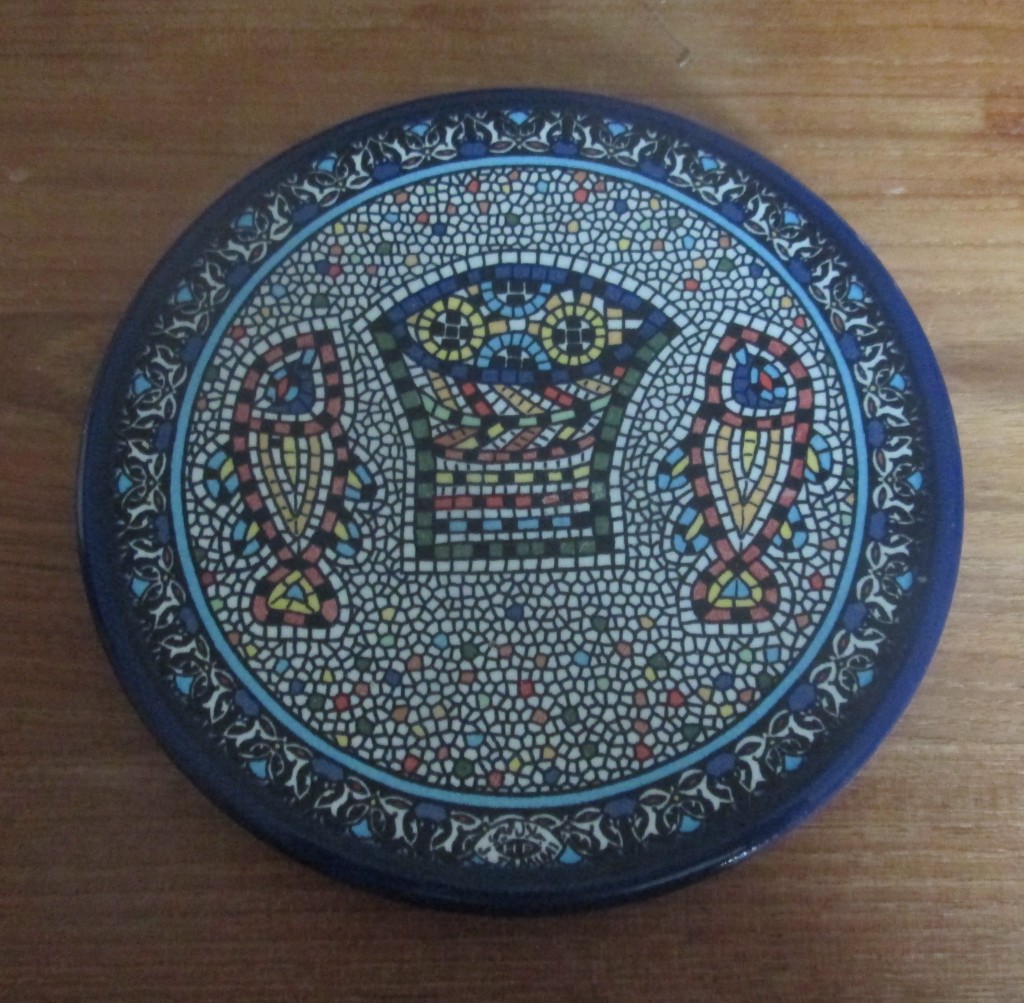
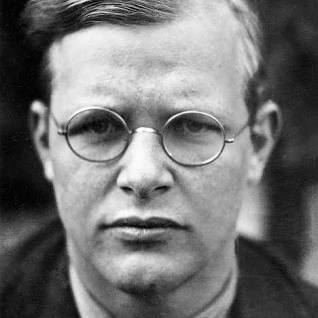


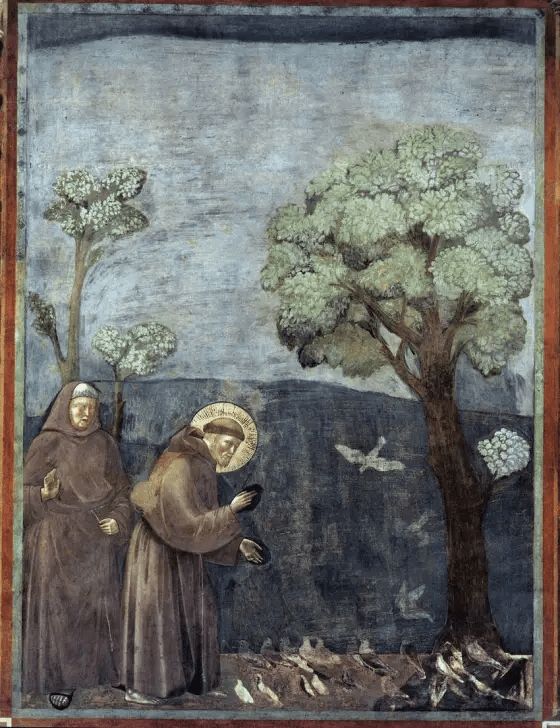


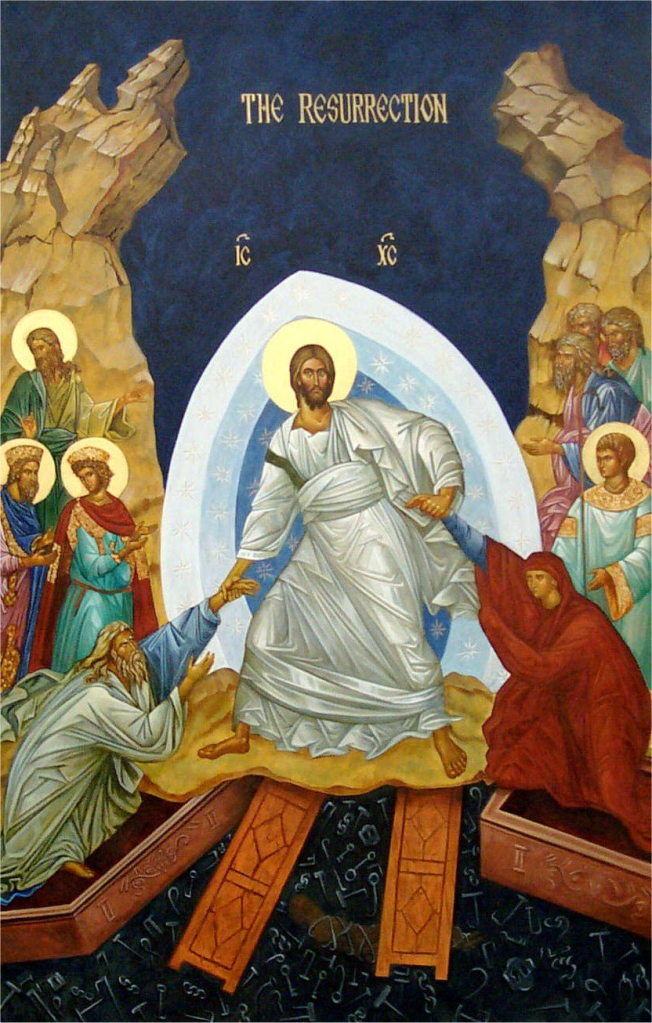
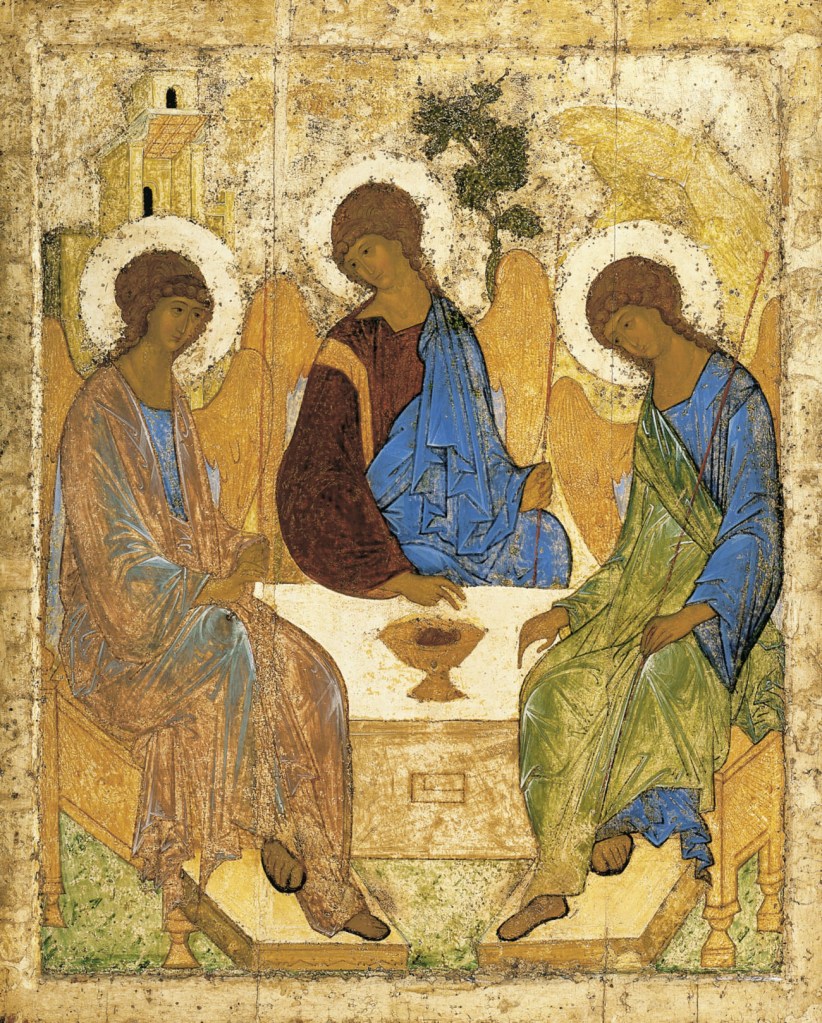


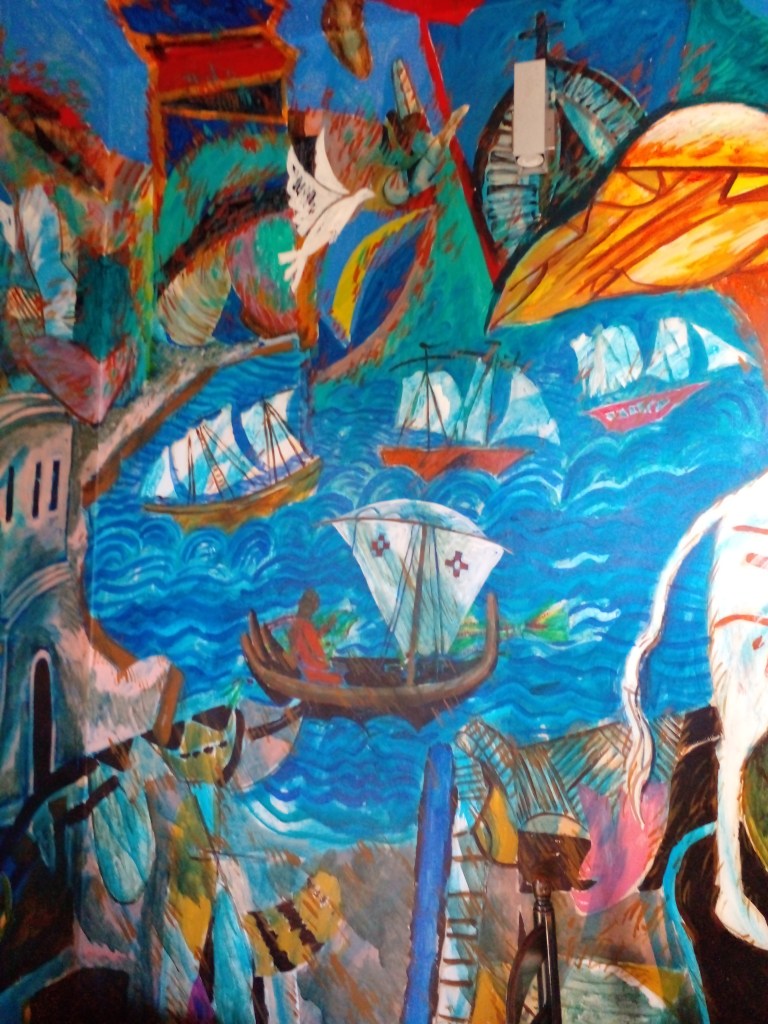


 faithineurope.net